Design ideas · Eco & Kraft Soap Packaging
Handmade Soap Boxes Design Ideas That Sell
By the Cosmetic Boxes NYC team · · 6 min read
In this guide
- What great design does for handmade soap bars
- 10 design ideas for handmade soap boxes
- Putting it together: an example
- Unboxing details that get shared
- Creating a cohesive product line
- Choosing colors and typography
- Printing methods and finishes
- Labels and information to include
- Designing for different channels
- Building a packaging design brief
- Budget-friendly design upgrades
- Sustainability messaging that works
- Testing your design
- From idea to proof
- Design mistakes to avoid
- Questions to ask your packaging supplier
- In summary
Great designs for handmade soap boxes do more than hold handmade soap bars. They tell shoppers what your brand stands for, make products feel worth the price, and turn every unboxing into marketing. This guide shares practical design ideas for custom handmade soap boxes, from color and typography to finishes, labeling and sustainability.
Whether you're launching a new brand or refreshing an established line, these ideas will help you brief a designer or work directly with our team.
What great design does for handmade soap bars
Beauty shoppers buy with their eyes. Packaging is often the first thing they see, on a shelf, in a gift bag or on social media. Good design makes handmade soap bars look trustworthy and desirable, sets expectations for quality and price, and helps customers find you again.
Design is practical too. Clear hierarchy helps shoppers find key information, color coding separates variants, and smart structure, such as kraft board or window patches, protects the product.
10 design ideas for handmade soap boxes
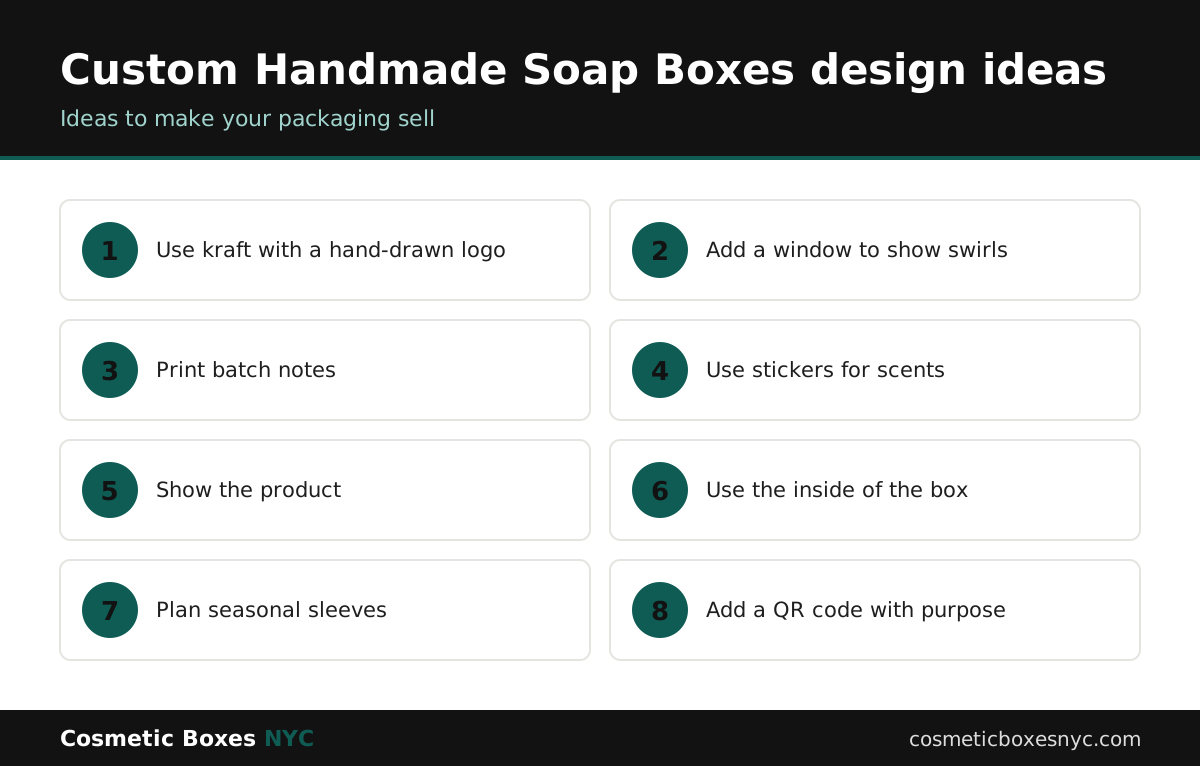
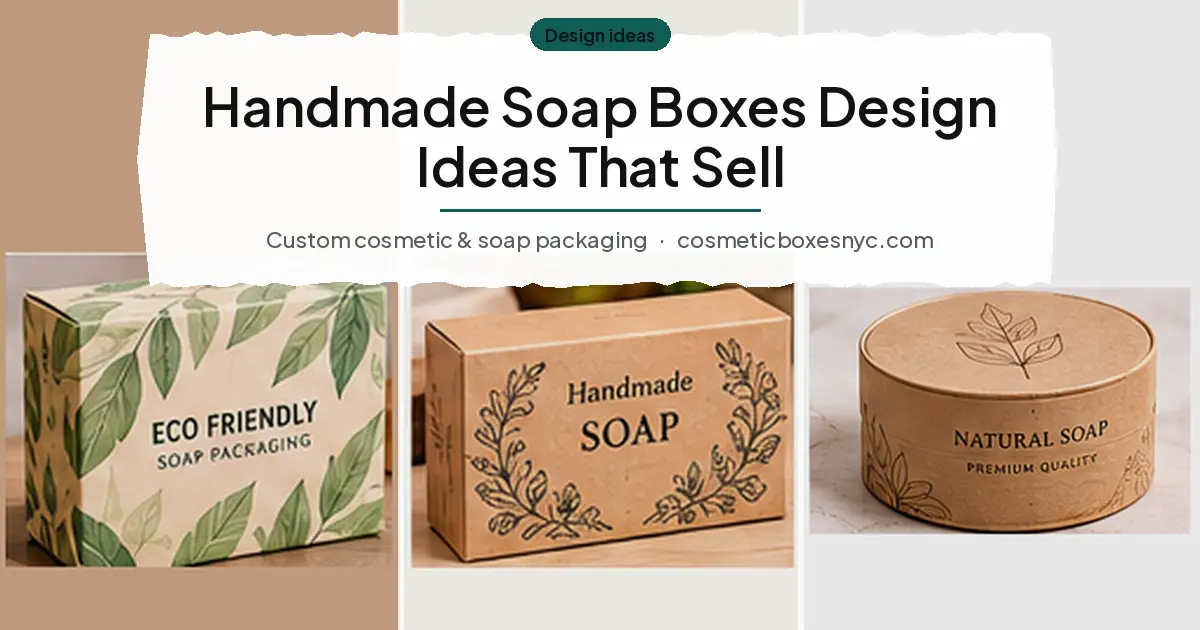
1. Use kraft with a hand-drawn logo
For handmade soap bars, this detail helps the packaging match the quality of the product inside. We can show this on your digital proof before you commit.
2. Add a window to show swirls
For handmade soap bars, this detail helps the packaging match the quality of the product inside. We can show this on your digital proof before you commit.
3. Print batch notes
It is a simple change that makes handmade soap boxes feel more considered without adding much cost.
4. Use stickers for scents
It is a simple change that makes handmade soap boxes feel more considered without adding much cost. Ask us for a mockup to see how it looks on your dieline.
5. Show the product
A window, illustration or texture photo helps customers understand what's inside. It pairs well with the other ideas on this list.
6. Use the inside of the box
A message, pattern or how-to guide inside the lid makes unboxing memorable and shareable.
7. Plan seasonal sleeves
A printed sleeve or sticker lets you celebrate holidays without reprinting core boxes.
8. Add a QR code with purpose
Link to tutorials, ingredient details, reviews or reordering, and tell customers what they'll get. It pairs well with the other ideas on this list.
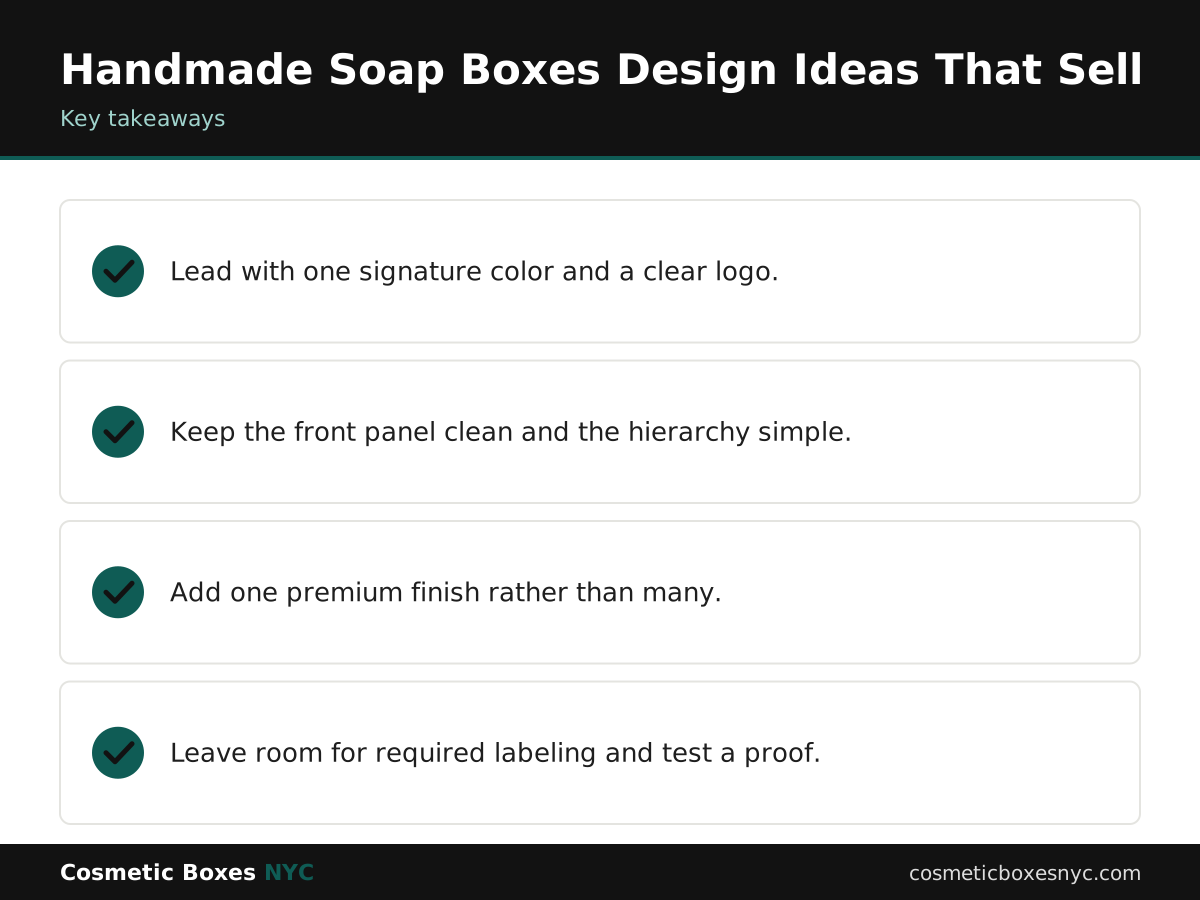
9. Keep the front panel clean
Your logo, product name and one key benefit are enough. Shoppers decide in seconds. We can show this on your digital proof before you commit.
10. Lead with one signature color
A single, ownable color across every box makes your brand instantly recognizable on shelves and in feeds. It pairs well with the other ideas on this list.
Putting it together: an example
Imagine a Brooklyn brand launching new handmade soap boxes. They choose one signature color, place the logo centered on the front with rose gold foil, list three key ingredients on the side, and print a thank-you message inside the lid.
For the holidays they add a printed sleeve instead of reprinting the box. The result looks consistent across every product, costs less than a full redesign, and gives customers a reason to share.
Unboxing details that get shared
Small touches make handmade soap boxes memorable: a printed inside lid, tissue paper in your brand color, a sticker seal, a thank-you card or a short message about how the product is made. These details cost little but encourage customers to post their unboxing, which puts your brand in front of new buyers.
Keep the reveal simple and intentional. One surprise inside the box feels thoughtful; five feels cluttered.
Creating a cohesive product line
Your handmade soap boxes should look like they belong with the rest of your range. Use the same grid, logo position, typefaces and finish across every product, then distinguish variants with color, a stripe or an icon. Shoppers learn your system quickly and can spot new launches instantly.
A cohesive line also makes reordering easier for retailers, because they can merchandise your products as a block on the shelf.
Choosing colors and typography
Color sets the mood before anyone reads a word. Minimal white with one accent feels clinical and trustworthy; pastels feel friendly; dark backgrounds with foil feel premium.
For type, pair one distinctive display face for your brand name with one clean, readable face for details. Keep small text at a legible size, especially ingredient lists.
Printing methods and finishes
Full-color CMYK printing handles gradients and photography. Pantone spot colors keep your signature shade consistent. One- or two-color printing on kraft is cost-effective and perfect for handmade brands.
Finishes add personality: soft-touch lamination feels velvety; gloss makes colors pop; foil stamping in gold, silver, rose gold or holographic adds shine; embossing and debossing add texture; spot UV highlights a logo on a matte box. On handmade soap boxes, one premium finish is often enough.
Labels and information to include
In the US, true soap made mainly of fats and lye and sold only as soap is regulated by the CPSC, while soaps that make cosmetic claims, such as moisturizing or deodorizing, are treated as cosmetics by the FDA and need cosmetic labeling. Check which applies to your bar before you finalize the design.
We'll leave space on the dieline for every panel you need and can print barcodes, batch codes and QR codes.
Designing for different channels
Where customers meet your handmade soap boxes shapes the design. On retail shelves, the front must communicate brand and product in seconds. In e-commerce, the unboxing moment and inside print matter most. In subscription boxes, a distinctive pattern helps your product stand out among others. On social media, a strong color or pattern makes posts recognizable.
If you sell in several channels, design for the toughest one first, usually retail, then add unboxing details.
Building a packaging design brief
A clear brief saves time and revisions. Include:
- Logo files, brand colors (Pantone if possible) and fonts.
- Product names, variants and how many designs you need.
- Required text: ingredients, net weight, warnings, usage.
- Examples of packaging you like and dislike.
- Budget, quantity and target delivery date.
Budget-friendly design upgrades
You don't need a big budget to make handmade soap boxes stand out. One bold Pantone color on kraft looks intentional. Stickers or belly bands brand plain boxes for small runs. Printing only the outside keeps costs down, and foil on the logo alone delivers premium impact.
Standardize one design across sizes and switch scents or shades with a colored stripe or sticker to keep quantities high.
Sustainability messaging that works
Avoid vague claims. Be specific about what's recyclable or compostable, which builds trust.
Design supports sustainability too: lower ink coverage, uncoated kraft and right-sized boxes all reduce waste.
Testing your design
Before a full run, review a digital proof at actual size, print a paper mockup and wrap it around a real bar. Check that the logo isn't hidden by folds, text is legible, and colors look right under store lighting.
Ask a few customers what they notice first. If it isn't your brand or product name, simplify.
From idea to proof
Send your logo, brand colors and examples of packaging you like. We'll place your artwork on the correct dieline, suggest finishes and send a free digital proof. Once you approve it, production takes 8 to 12 business days.
If you don't have a designer, our team can help turn a simple brief into print-ready artwork.
Design mistakes to avoid
- Placing key text on folds or glue flaps.
- Using low-resolution images.
- Too many fonts and colors.
- Tiny, low-contrast ingredient text.
- Skipping a printed proof for brand-critical colors.
Questions to ask your packaging supplier
- Which board and finish do you recommend for handmade soap boxes, and why?
- Can you send a plain or printed sample before the full run?
- What are the price breaks at 250, 500 and 1,000 units?
- How long is production after proof approval, and is rush available?
- Do the boxes ship flat, and how are they packed?
Good suppliers answer these quickly and clearly. At Cosmetic Boxes NYC we include recommendations with every quote, so you can compare options side by side.
In summary
The best handmade soap boxes designs are simple, consistent and made for how your product is sold. Pick a signature color, make your logo easy to see, add one premium detail, and keep information clear.
Ready to bring your design to life? Get a free quote and a digital proof from our team.
FAQ
Frequently asked questions
Can I print full color on handmade soap boxes?
Yes. We print CMYK full color, Pantone spot colors and one- or two-color designs.
Which finishes look most premium?
Soft-touch lamination with gold or rose gold foil is a popular combination; embossing adds texture.
Do you help with design?
Yes. Every order includes free artwork checks and a digital proof.
How much do custom handmade soap boxes cost?
Price depends on size, quantity, material, printing and finishes. Send your specs for tiered pricing within one business day.